

Air Traffic Management and Communication Over ATN/IPS
ATMACA project addresses an innovative solution enabling effective, seamless, interoperable air-to-ground datalink communication technologies and digital flight monitoring and management environment through aeronautical telecommunication (ATN) based on internet protocol suite (IPS) within all domains of flight.
Project BUDGET
EU
CONTRIBUTION
€0
UKRI
CONTRIBUTION
€0
TOTAL
PROJECT BUDGET
€0
Follow us:
https://www.sesarju.eu/projects/ATMACA
CORDIS website:
https://cordis.europa.eu/project/id/101167070
INTRODUCTION
Next-Generation Air–Ground Communications for the Digital European Sky
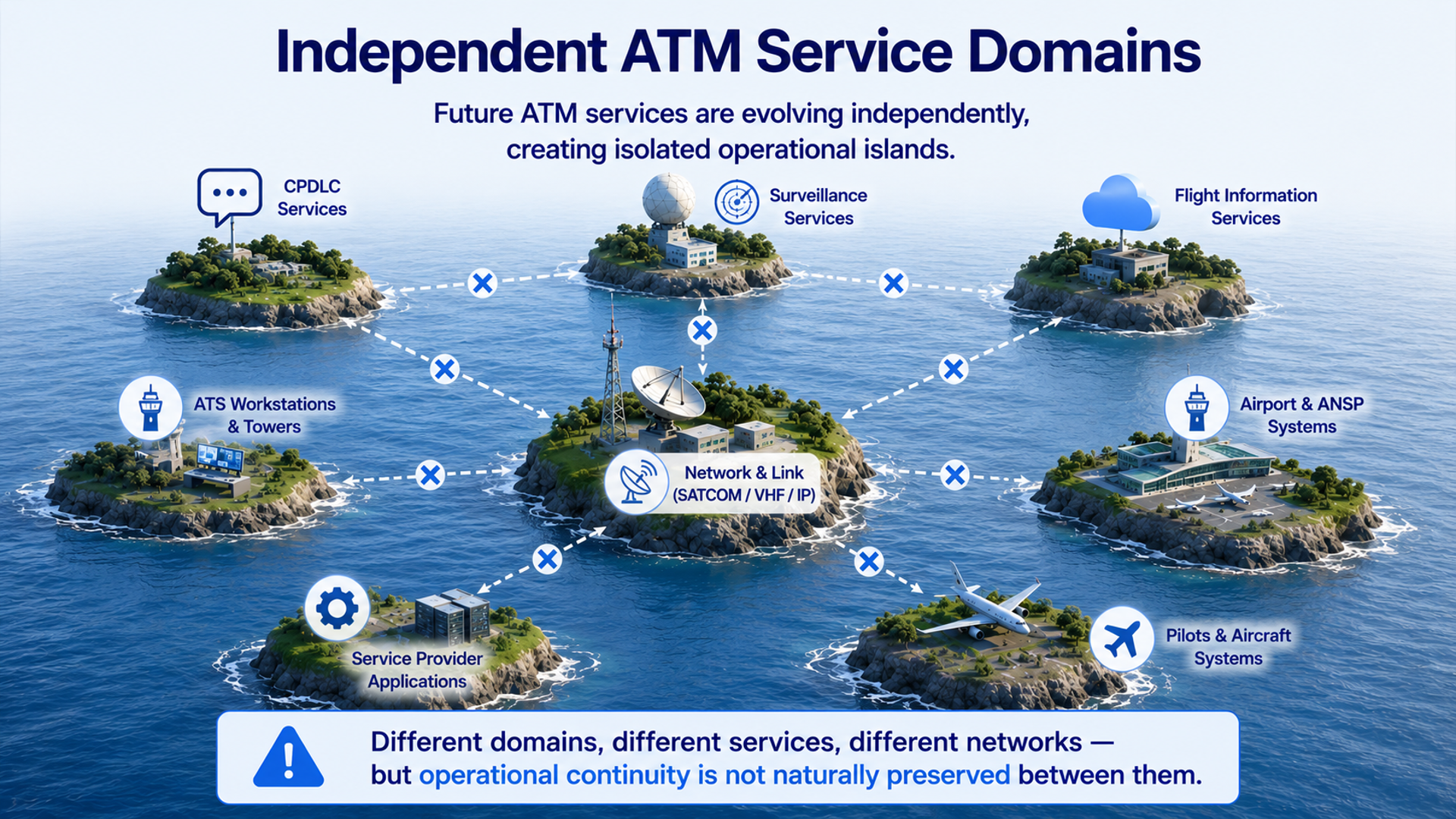
Future Air Traffic Management depends on secure, continuous and interoperable air–ground communications. As aviation evolves towards the Digital European Sky, communication technologies must support seamless connectivity across heterogeneous networks while ensuring uninterrupted digital services throughout all phases of flight.
The ATMACA project addresses this challenge by developing and validating an innovative ATN/IPS-based communication architecture that introduces application-layer mobility management, enabling reliable, scalable and future-ready air–ground communications.

A New Generation of Air–Ground Communication
ATMACA introduces an IP-based communication architecture designed to overcome the limitations of legacy aeronautical communication systems. By integrating application-layer mobility management with commercial off-the-shelf technologies, the proposed solution enables seamless connectivity, continuous communication sessions and interoperability across multiple communication networks.
Rather than relying on a single communication link, ATMACA intelligently manages communication continuity, ensuring that digital ATM services remain available even during network transitions.
Intelligent Communication Continuity
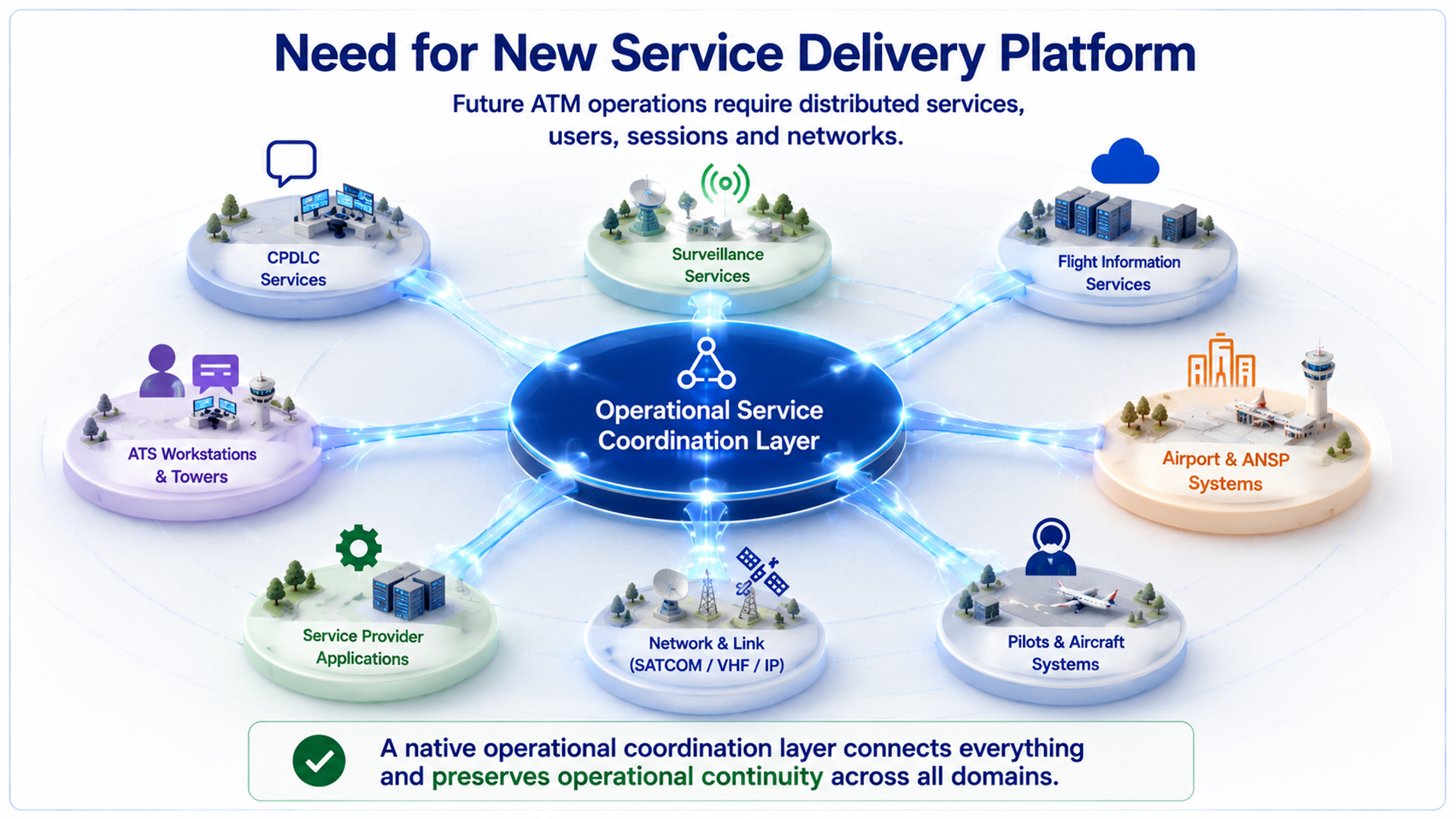
The ATMACA architecture combines four complementary management capabilities that work together to ensure uninterrupted operations:
- Context Management preserves operational information across applications and communication services.
- Mobility Management maintains communication continuity while aircraft move between heterogeneous networks.
- Session Management keeps operational sessions active throughout mobility events.
- Connection Management automatically selects and maintains the most appropriate communication link to maximise service availability.
Together, these capabilities create a resilient communication framework capable of supporting future ATM services.
From Innovation to Operational Validation
The ATMACA solution has been progressively validated through a comprehensive validation campaign covering concept validation, communication protocol simulations, protocol emulation, Human–Machine Interface evaluations, Human-in-the-Loop simulations and operational flight trials.
These complementary validation activities demonstrated the feasibility, interoperability and operational maturity of the proposed ATN/IPS-based communication architecture, providing a solid foundation for the future evolution of digital air traffic management.
Supporting the Future of Aviation
ATMACA is more than a communication protocol. It establishes a flexible digital communication framework that supports the long-term evolution of Air Traffic Management towards the Digital European Sky. By enabling reliable, seamless and interoperable air–ground communications, the project provides a foundation for future ATM services and creates opportunities for the integration of emerging aviation concepts, including U-space, UTM and advanced unmanned aircraft operations.

BENEFITS oF ATMACA
ATMACA delivers tangible operational benefits by enabling reliable ATN/IPS-based communications for the future Digital European Sky. Its innovative architecture supports safer, more efficient and more sustainable air traffic operations while providing a foundation for next-generation aviation services.

Reducing Operational Costs
ATMACA introduces a seamless ATN/IPS-based air–ground communication architecture built on commercial off-the-shelf (COTS) technologies and application-layer mobility management. By reducing communication disruptions, minimizing infrastructure complexity, and enabling more efficient data exchange across heterogeneous networks, the solution has the potential to lower implementation, maintenance, and operational costs while supporting the digital transformation of Air Traffic Management.
Enhancing Safety
Reliable and uninterrupted communication is fundamental to safe air traffic operations. ATMACA enhances operational safety by providing seamless session continuity during network transitions, improving the reliability of controller–pilot data communications, and enabling continuous access to digital ATM services. The solution has been successfully validated through real-time simulations, protocol demonstrations, and flight trials, demonstrating its capability to support future safety-critical ATM environments.


Reducing Fuel Consumption
More reliable digital communications enable more efficient air traffic operations. By supporting continuous data connectivity and improving the exchange of operational information between aircraft and ground systems, ATMACA contributes to more predictable trajectories, reduced operational inefficiencies, and improved flight management. These capabilities create opportunities to reduce unnecessary fuel burn and support more efficient flight operations.
Reducing Environmental Impact
By enabling more efficient flight operations and supporting future digital ATM services, ATMACA contributes to reducing aviation’s environmental footprint. Improved communication performance can help minimize delays, holding patterns, and unnecessary route deviations, leading to lower fuel consumption and reduced CO₂ emissions. Furthermore, the flexible ATN/IPS architecture provides a communication foundation for future U-space, UTM, and unmanned aircraft operations, supporting the sustainable evolution of the aviation ecosystem.

VALIDATION ACTIVITIES

To demonstrate the feasibility and operational readiness of the ATMACA solution, six complementary validation activities—ranging from concept definition and communication simulations to human-in-the-loop experiments and real flight trials—were progressively carried out. Together, these activities provided strong evidence of the maturity and applicability of the proposed ATN/IPS-based communication architecture, proving its capability to support future Digital European Sky services through seamless, reliable, and interoperable air–ground communications.

01 Green Route Operations (GRO) Concept Validation

02 Simulation of Datalink Communication Protocol

03 Emulation of Datalink Communication Protocol

04 Early-Stage Evaluation of Low-Fidelity HMI

05 Role-Based Human-in-the-Loop HMI Simulation

06 Datalink Communication Flight Trial
CONSORTIUM









PROJECT DELIVERABLES
Click to images below to download the deliverables.